
It's Simple, Don't Get Sick: Necessary or Unnecessary Medical Care In The Light Of Imperial Autocracy
This article takes a critical reading on the proposed cuts to health and welfare programs asking how these changes will affect the majority-minority communities.

Back in 2025, the attack on medical care was being waged. The wave of concern about the cuts to Medicaid and Medicare followed the episodic trend of being a hot topic to one put out of sight, and out of mind, for some.
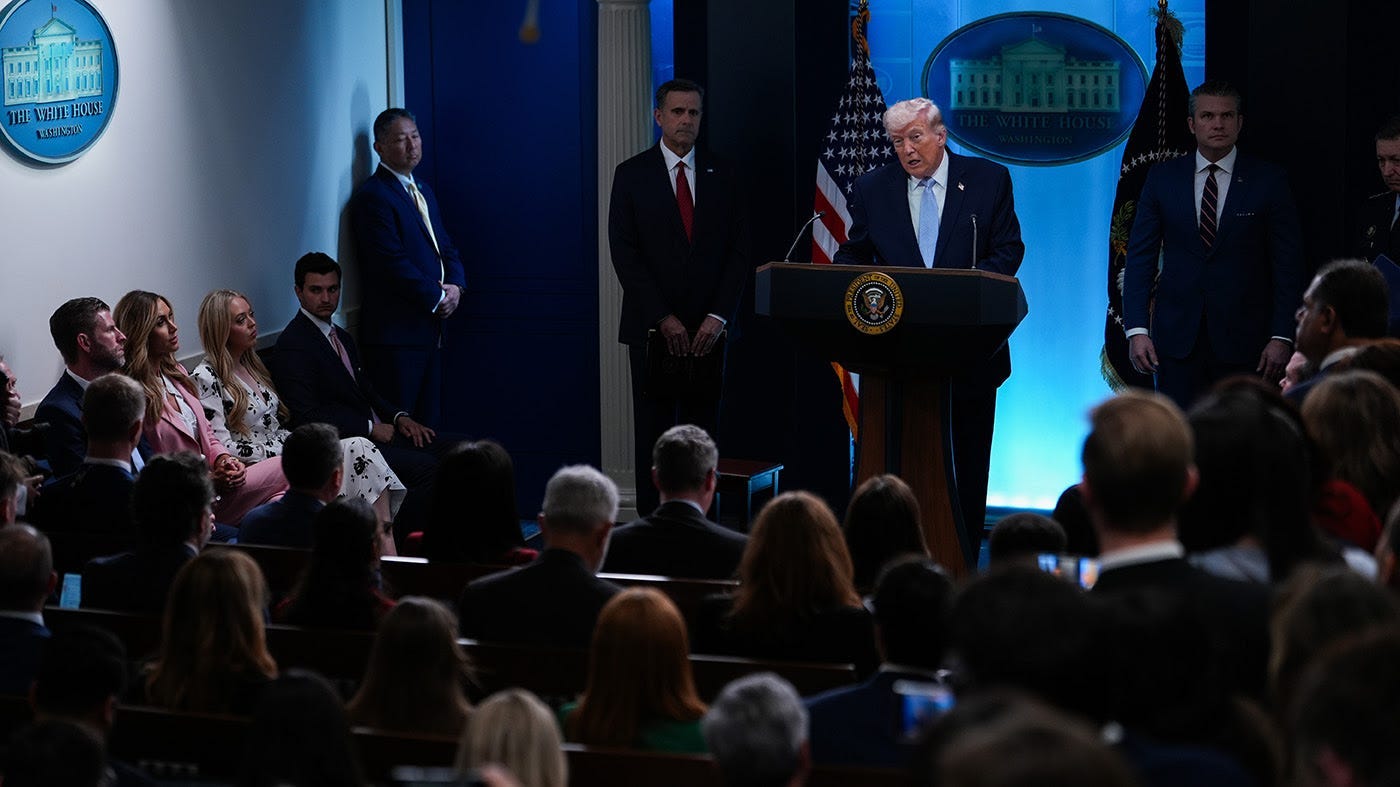
The matter took center stage on April 1, 2026, when the president made comments about the unnecessary expense and continued governmental payment of these health care programs.
Writing for Forbes, Alena Hall and Meaghan Harmon noted the following statistics on the number of Americans who rely on these health insurance programs. The statistics are the most recent, updated on February, 14, 2025.
As of April 2024, approximately 67.3 million U.S. adults are enrolled in Medicare coverage, according to the Centers for Medicare and Medicaid Services.
Approximately 50.4% of beneficiaries are enrolled in a Medicare Advantage plan, while the remaining 49.6% are enrolled in Original Medicare.
Nearly 90% of Medicare beneficiaries are at least 65 years old.
Zooming out, nearly one-fifth of the U.S. population was enrolled in Medicare in 2022, according to the U.S. Census Bureau.
The number of people enrolled in Medicare Advantage plans (provided by private insurance companies that work with Medicare) more than doubled over the past decade, increasing by over 17 million beneficiaries from 2013 to 2023, per CMS.
Prescription drug coverage remains a priority, as 80.4% of Medicare beneficiaries are enrolled in a Medicare Part D prescription drug coverage plan.
When the lens is drawn out to see how many Americans are enrolled, and the continually increasing need for this program, the importance of this matter heightens.
In 2022, 18.7% of the U.S. population was enrolled in Medicare.
As of April 2024, 67.3 million people are enrolled in a Medicare plan.
89.5% of Medicare beneficiaries are at least 65 years old.
Roughly 33.9 million people (50.4%) are enrolled in Medicare Advantage and other health plans, while 33.3 million are enrolled in fee-for-service (FFS) plans.
54.1 million (80.4%) of Medicare beneficiaries are also enrolled in a prescription drug Medicare plan.
57% (31.1 million) of these people are enrolled in a Medicare Advantage prescription drug plan, while the remaining 43% (23 million) are enrolled in a standalone prescription drug plan (PDP).
“The number of people on Medicare continues to increase as the remainder of the baby boomer generation (the second largest generation by population size) approaches age 65. Considering U.S. adults can start receiving retirement benefits from the Social Security Administration as early as age 62, many older adults are no longer part of the workforce or maintain access to employee-sponsored health insurance. Medicare fills this health care need” (Forbes, February 2025).
The focused attention on this health and welfare program has the potential to further dismantle the American middle class. Likewise, communities where these programs, including Social Security, daycare, housing, education, worker programs/unionization, etc., are the target of financial devastation. These communities, then, face an even harder, imbalanced hill to climb to gain financial security and personal/professional promotion. Such a ghettoization amplifies the cleavage between the bourgeoisie, the proletariat, and the highest governmental upper class.
Don’t Lose Your DayCare
Following along this same line, the president has made this comment on daycare. The Hill reported that “Trump floated letting states handle day care. Advocates call it a lead balloon.”
“President Trump’s suggestion this week that the federal government should step away from day care and leave the matter to the states landed with a thud among advocates” (The Hill, April 4).
It’s a subtle move, but follows along the lines of the push to privatize welfare programs. Daycare, for some, is not a negotiable matter; it’s a necessity for basic survival.
The visible and subtle moves to privatize and get the government out of paying and supporting welfare programs keep the needle for most Americans pinned at survival mode, with little to no leverage on how to advance to living.
Activating these programs, Medicare/Medicaid/Daycare, allows multiple generations of Americans to engage in programs they have paid into, some for decades. Removing, reducing, or terminating these programs is more about a financial shell game than it is about political re-positioning for majority-minority communities.
Rhetorical Slight Of Hand

What About This?
C-SPAN, VP JD Vance Announces White House will “Temporarily Halt” some Medicaid Funding to Minnesota, February 26, 2026,
“Vice President JD Vance announced Wednesday the White House will “temporarily halt” some Medicaid funding to Minnesota as part of the administration’s efforts to crack down on alleged fraud in the state. “What we’re doing is we are stopping the federal payments that will go to the state government until the state government takes its obligations seriously to stop the fraud that’s being perpetrated against the American taxpayer,” he said at a press conference alongside Centers for Medicare and Medicaid Services Administrator Dr. Mehmet Oz. The move comes a day after President Trump tasked his vice president with leading the administration’s “war on fraud” during his State of the Union address. Full video here: https://www.c-span.org/program/public...“ (C-SPAN, YouTube, February 2026).
WAAY 31 News, White House Press Secretary Karoline Leavitt: President Trump wants waste out of Medicaid, July 19, 2025,
MS NOW, Trump: It’s ‘not possible’ for U.S. to pay for daycare, Medicaid, and Medicare, April 2, 2026,
“President Trump said it’s “not possible” for the U.S. to pay for daycare, Medicaid, and Medicare at a White House event yesterday. Maya Rupert, former Campaign Manager for Julián Castro’s presidential campaign and former adviser to Elizabeth Warren’s presidential campaign, joins Chris Jansing with her reaction to Trump’s comments and how Democrats can use them to their advantage in the midterms” (MS NOW, YouTube, April 2026).
MS NOW, Trump at closed event: ‘not possible’ to pay for Medicaid, Medicare, day care [Video Short], April 2, 2026,
Follow the Budget-Cutting Road (and Dates)
Fox Business, White House budget to slash the growth of Medicaid, May 23, 2017,
“Independent Women’s Forum President Carrie Lukas, Daily Caller News Foundation Editor-in-Chief Chris Bedford, and Democratic Strategist Richard Goodstein on the White House budget slashing the growth of Medicaid” (Fox Business, YouTube, May 2017).
Senator Sheldon Whitehouse, Sen. Whitehouse Warns of GOP “Sneak Attack on Medicare,” July 30, 2025,
“On the 60th Anniversary of Medicare and Medicaid, Senator Whitehouse warns that both programs will be slashed — one by the Big Ugly Bill, one by a process called “sequestration.” Sheldon Whitehouse represents Rhode Island in the U.S. Senate, where he champions policies to uphold American leadership in the world, protect our planet in a changing climate, and hold the powerful accountable” (YouTube, July 2015).
The Hill reported on April 4, “Trump floats letting states handle day care. Advocates call it a lead balloon.”
“President Trump’s suggestion this week that the federal government should step away from day care and leave the matter to the states landed with a thud among advocates” (The Hill, April 4).
What Could The Rationale Be?
The move continues to point to the privatization of health and welfare programs. The U.S. federal government has maintained a process of working to not spend money on more programs than necessary. What is “necessary” comes by way of the understanding and political agenda of a president. The current administration reads that health and welfare programs are unnecessary, with the military being overly necessary to the point of a U.S. defense spending increase to $1.5 trillion for the 2027 fiscal budget.
The backbone of this objective from the current administration follows the president’s ego. The desire is to be as boastful as other countries around the world, such as China, South Korea, the Soviet Union, and, ironically, Iran and Iraq. Taking a page from communist and theocratic countries, the president sees himself embroiled in the American psyche and history. His egotistical desire to be politically canonized is working at a dizzying speed.
The Times Now News (TN) points to the Trump-Kennedy Center for the Performing Arts as an example of how the president is politicizing culture through his branding.
“Whether this new Trump-era version of the institution [Trump-Kennedy Center for the Performing Arts] thrives or fractures is still uncertain. But one thing is clear — for Donald Trump, every platform is a stage and every stage is political.
“Trump’s focus on the Kennedy Centre appears to be more about influencing people than it is about honouring the artists. Not only is he altering who is invited by reimagining America’s cultural icons in his own likeness, but he is also rewriting the narrative of who defines American culture” (Times Now, November 3, 2025).
These Don’t Cover The Cost
Perhaps the president, or at least his advisors, is considering the State Health Insurance Assistance Program (SHIP) to pick up the onus of the Medicare/Medicaid issues.
“A SHIP is a volunteer-staffed free helpline for seniors, their families, and caregivers who need help with Medicare. SHIP counselors have training to offer competent and unbiased advice. They [can] help…with enrollment, comparing plans, payment options, responding to denied claims, and reporting and understanding Medicare fraud or abuse” (US News, Health, April 3, 2026).
Though helpful to seniors who are trying to navigate the formidable health insurance waters, SHIP is not a program designed to provide insurance coverage for health care. Rather, SHIP is a neutral, government-funded, state and grant-supported health insurance broker which, unlike other healthcare brokers, does not take a commission from those whom they help.
“A SHIP is a volunteer-staffed, free health benefits counseling service for Medicare beneficiaries. SHIP are funded by the U.S. Administration for Community Living and are not affiliated with any commercial insurance plans.
“Getting help with Medicare is like getting help with your taxes, says Scott Maibor, managing director at Senior Benefits Boston LLC in Massachusetts. Some people do it on their own, while some hire an accountant” (US News, Health, April 3, 2026).
SHIP is mainly a volunteer-operated service, with sister programs across the U.S. Knowing the difference of this program is useful.
“SHIPs also have sister programs, such as:
Senior Medicare Patrol. SMP is a program available to answer any questions about potential Medicare fraud, errors, or abuse. The program can also help you report such instances to the right state or federal agency for investigation.
Medicare Improvements for Patients and Providers Act. MIPPA can help low-income beneficiaries understand their payment options for Medicare.
“These programs may share volunteers, program structure, and often the same toll-free helpline” (US News, Health, April 3, 2026).
On the surface, if a politician is seeking to find budget cuts to healthcare, recognizing that many voters are unaware of the mechanics and operations of healthcare services, like SHIP, these programs could easily be misrepresented to articulate the involvement of these programs and, therefore, extending the funding for Medicare/Medicaid appears to be additional expenses from the government (read: fiscal waste on benefit programs). The reality is quite different.
“SHIP funds may be distributed to states based on various factors. These funds can include both federally allocated discretionary (optional) or mandatory grants to specific states based on needs, including their population demographics.
“SHIPs are currently mainly federally funded through a few methods, according to Congress.gov:
The main funding for SHIPs comes from the U.S. Administration for Community Living, which receives funding through the annual federal appropriations process, specifically the Departments of Labor, Health and Human Services, and Education, and Related Agencies Appropriations Act.
Mandatory special program funding under certain acts, such as MIPPA
“Funding for SHIPs has been threatened a few times in the past.
“Without SHIPs, Medicare enrollees would be left to navigate the state-specific nuances of their Medicare program largely alone, says Kelsey Simasko, an attorney at Simasko Law in Mount Clemens, Michigan.
“‘I imagine a loss of SHIPs funds will result in more insurance brokers,’ she adds.
“While insurance brokers can be helpful for seniors navigating Medicare, they often earn commissions through certain plans, as opposed to SHIPs, which are a neutral source.
“Without SHIPs, individuals who lose coverage or have inadequate coverage will be left without an extra lifeline that SHIPs provide” (US News, Health, April 3, 2026).
Knowing how SHIP and similar programs work, accessing these programs, and updating one’s current healthcare options becomes the responsibility of healthcare recipients who may not have such resources or the ability to conduct this research. A perfect recipe for a politician to use in framing a counterargument on why Medicare/Medicaid should be at least reduced in funding or terminated from governmental oversight and payment, giving this financial responsibility to the states. What a difference misinformation and a lack of clear transparency make in favor of politicians.
Other programs being targeted for major financial reversal and, in some cases, complete erasure are Community Development Financial Institutions (CDFI).
“CDFIs are specialized organizations that aim to support economically disadvantaged communities by providing access to capital and financial services. They can take various forms, including community banks, credit unions, loan funds, and venture capital funds. Established under the Riegle Community Development and Regulatory Improvement Act of 1994, CDFIs are certified by the U.S. Department of the Treasury, which recognizes their commitment to community development” (National League of Cities, September 2, 2025).
There are multiple CDFI structures, each providing a different level of fiscal support for disenfranchised and economically challenged communities. The CDFI’s government website defines a few of the most useful orograms.
“There are several types of CDFIs, each serving different community needs:
Community Development Banks: For-profit institutions that provide capital to rebuild low-income communities.
Community Development Credit Unions (CDCUs): Nonprofit cooperatives that offer affordable banking services to lower-income members.
Community Development Loan Funds: Nonprofit lenders that support housing and business development in underserved areas.
Community Development Venture Capital Funds: Investors that provide equity investments and loans to small businesses in low-income communities.
Microenterprise Development Loan Funds: Nonprofit lenders that support very small businesses and entrepreneurs who lack access to conventional credit” (CDFI, n.d.).
The National League of Cities noted the impact CDFIs have on communities.
“CDFIs play a crucial role in fostering economic growth and opportunity in underserved areas. By bridging the gap between public and private financing, they help create sustainable economic ecosystems, promote entrepreneurship, and improve the quality of life for individuals in low-income communities. Their mission-driven approach ensures that they prioritize community needs and work closely with local policymakers to address financial disparities” (National League of Cities, September 2, 2025).
The president’s proposed 2027 fiscal budget is where these changes and financial pressures present themselves. Released on Friday, April 3, the expanded budget presently awaits Congress’s return from its two-week recess.
What changes may take place is the unanswered question. It is assumed, with historic precedent, that the proposed budget will be adjusted to meet an agreement between the two major political parties. The depth of these changes is what remains to be seen. In the meantime, the power of the purse remains rhetorically in Congress’s hands. Yet the current administration is operating from an assumed position of fiscal power outside the immediate input of Congress.
The Potential for an Imperialistic Autocratic Neo-American Capitalist ideology
Forbes Breaking News, ‘They Call Me King Now!’: Trump Mocks ‘No Kings’ Protests During Remarks About Palm Sunday, April 1, 2026,
Borrowed from a White House event on Wednesday, April 1, 2026.
If all of this is not enough, The Hill’s Tip Sheet published an article on April 5, which proves the silent, behind-the-scenes power grab of authoritarianism that the current administration is going through.
Trump crossed an oily line of state sovereignty in California — your state is next
“Last month, the Trump administration quietly pushed the country further into authoritarianism. There were no masked federal agents, no mass protests, and no confrontational press conferences.
“But by invoking the Defense Production Act to restart a troubled oil pipeline in California, the administration ignored both state law and court orders and went against the will of elected officials and their constituents. These actions trampled on the idea of state sovereignty in a way that should horrify every American, right, left, or center” (The Hill, Talia Nimmer, April 5).
Here’s the BIG BEAUTIFUL Question: Why is this important to the current cultural, socio-political framework of the U.S.? Market and corporate competition are being misunderstood and reappropriated to support an Imperialistic Autocratic Neo-American Capitalist ideology.
Without the application and ongoing systematic institutionalization of privatization, the financial necessity to support the Imperialistic Autocratic Neo-American Capitalist ideology will not survive. Thus, deflecting American cultural attention away from these operational measures allows this process to unfold with less interruption, typically by Executive Order (E.O.), and put into effect only to be discussed after the fact.
Political Hegemony Is King
What comes through the collection of grandious reduction of health and welfare programs, and CDFIs, is the elevation of the seated president’s ego through the reappropriation of fiscal political support. The potential outcome is a great loss of programs for the majority-minority American communities.
The truth? Social targeting these programs, directly and indirectly, gives more financial and political power to the current administration, further eroding the power of the purse Constitutionally designated to the administrative branch of government (the Senate and the House of Representatives). Acting in plain sight, the presidency is being usurped as a business enterprise with the founding Chief Executive Officer (CEO) securing that, even if he is forced to leave the current position in 2 1/2 years, the legacy of the founding American Imperial Autocratic CEO will be secure in American history.
Alan Lechusza Aquallo